
International Money Transfer Limits: Bank Transfer vs Online Transfer
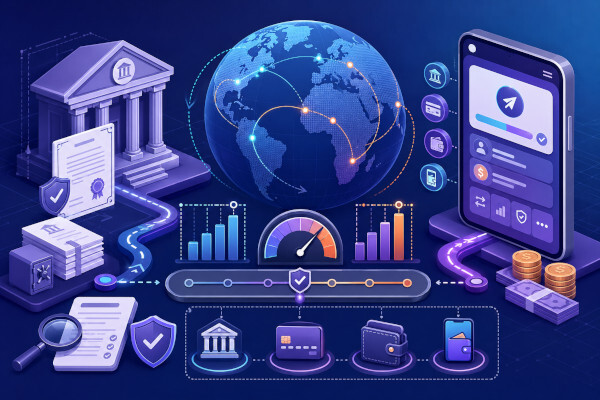
International money transfer limits are not the same for every person, bank, app, country, or currency. One user may be able to send a large wire transfer through a bank after providing documents. Another user may be blocked from sending a much smaller online transfer because the account is new, the card limit is low, or the recipient’s mobile wallet cannot accept more money.
The real limit is usually a combination of:
- the bank or money transfer provider;
- the sending country;
- the receiving country;
- the currency;
- the amount;
- the payment method;
- the payout method;
- the sender’s verification level;
- the recipient’s bank or wallet rules;
- anti-money laundering and fraud checks;
- the purpose of the transfer.
A bank transfer may support a larger amount than an online transfer, but it can be slower and may require more documents. An online transfer may be faster and easier for personal payments, but new users may face lower limits until they complete verification.
Quick answer: how much money can you transfer internationally?
There is no universal international money transfer limit. Banks and online providers set their own limits based on country, account type, verification level, payment method, destination, currency, payout method, and risk checks.
Traditional bank wires may support larger transfers, but the bank may ask for documents and review the payment. Online money transfer services may have lower limits for new or unverified users, but limits can increase after identity verification or when using a different payment method.
Large transfers may also trigger regulatory reporting, source-of-funds checks, or extra questions. This does not mean the transfer is illegal. It usually means the bank or provider must understand who is sending the money, where it comes from, who receives it, and why it is being sent.
| Transfer type | Typical limit logic | Best for | Main issue |
|---|---|---|---|
| Bank wire transfer | Bank and account-specific; often higher | Large formal payments | Slower processing, documents, fees |
| Online transfer service | Provider, route and verification-specific | Personal transfers and remittances | Lower limits for new users |
| Cash pickup transfer | Usually lower than bank deposit | Emergency cash | Agent rules, ID, cash availability |
| Mobile wallet transfer | Wallet and country-specific | Smaller practical transfers | Wallet transaction and balance caps |
| Card-funded transfer | Card and provider-specific | Fast payments | Lower limits and higher fees |
| Business or FX provider | Often higher after onboarding | Large planned transfers | Compliance review and documentation |
The amount you can send is not only a technical number. It also depends on whether the provider is comfortable with the risk and whether you can document the payment if asked.
What counts as an international money transfer limit?
When people ask about transfer limits, they often mean “maximum amount per transaction.” In reality, there are several types of limits.
Per-transfer limit
A per-transfer limit is the maximum amount you can send in one transaction.
For example, a provider may allow $3,000 per transfer for one user and $50,000 or more for another user after verification. Another provider may allow a much higher amount for bank-funded transfers but a lower amount for card-funded transfers.
This is the limit users notice first, but it is not the only one.
Daily limit
A daily limit is the maximum amount you can send in a day. Some providers count this as a calendar day. Others may use a rolling 24-hour period.
A provider may allow one large transfer or several smaller transfers until you reach the daily maximum.
Weekly, monthly or rolling limit
Some banks and online services limit how much you can send over 7 days, 30 days, 60 days, 90 days, or 12 months.
This matters for regular remittances and large staged payments. You may be able to send one transfer today but be blocked from sending another if you exceed the rolling period limit.
Account verification limit
Unverified or partially verified users usually have lower limits.
A provider may ask for:
- government ID;
- proof of address;
- selfie or biometric check;
- source-of-funds documents;
- reason for transfer;
- recipient information;
- bank statement;
- tax document;
- business document.
After verification, the provider may raise the limit. This is common with online money transfer services because they often start with lower limits for new accounts.
Payment method limit
The way you pay can affect the maximum amount.
Common funding methods include:
- bank account;
- wire transfer;
- ACH or direct debit;
- debit card;
- credit card;
- Apple Pay or Google Pay;
- provider balance;
- cash at an agent location.
Bank account or wire funding may allow larger amounts. Card-funded transfers are often lower because of card network rules, fraud risk, chargebacks, and issuer limits.
Payout method limit
The way the recipient receives money can also limit the transfer.
Payout methods may include:
- bank deposit;
- cash pickup;
- mobile wallet;
- card deposit;
- app balance;
- bill payment.
Bank deposit often supports higher amounts than cash pickup or mobile wallet. Cash pickup has practical limits because of agent rules, local cash availability, ID checks, and safety. Mobile wallets may have strict transaction and balance caps.
Country and currency limit
Limits can change by country and currency.
A provider may allow a high limit to one country but a lower limit to another. The receiving country may have stricter rules, fewer payout partners, or lower local banking limits. Some currencies and corridors are treated as higher risk or require more checks.
Compliance or source-of-funds threshold
A transfer can be within the provider’s stated limit and still be paused for review.
Large transfers may trigger questions about:
- where the money came from;
- why it is being sent;
- who the recipient is;
- whether the sender and recipient are related;
- whether the transaction fits the sender’s normal activity;
- whether the destination or recipient is high-risk.
This is normal. Banks and regulated money transfer providers are required to monitor suspicious activity and comply with anti-money laundering, sanctions, and fraud-prevention rules.
Bank transfer limits: how they usually work
Banks often support larger international transfers than consumer remittance apps, especially for established customers, business clients, private banking clients, or branch-assisted wires.
But this does not mean you can always send any amount instantly.
Banks may allow larger transfers than apps
A bank may be more suitable for large formal transfers because it already holds your account, knows your transaction history, and can process international wires directly or through correspondent banks.
Bank transfer limits may depend on:
- personal or business account type;
- online banking limits;
- branch transfer limits;
- country and currency;
- account history;
- security settings;
- relationship with the bank;
- regulatory environment;
- destination risk;
- payment purpose.
A business account may have higher limits than a personal account. A branch-assisted wire may allow more than an online banking transfer. A private banking client may receive different support than a new retail customer.
Online banking limit vs branch limit
Banks often have different limits for different channels.
You may see:
- lower online banking limits;
- higher limits if you visit a branch;
- temporary limit increases;
- separate business banking limits;
- additional approval for large transfers;
- enhanced security steps for new recipients.
If your online banking limit is too low, the bank may still allow a larger transfer through a branch or by request. This can take more time, so do not leave large transfers until the last minute.
Large bank wires may require extra checks
For a large international wire, a bank may ask for supporting documents.
Common examples include:
- property purchase agreement;
- invoice;
- tuition bill;
- business contract;
- inheritance document;
- sale agreement;
- tax document;
- payslip;
- bank statement;
- proof of relationship to recipient;
- explanation of payment purpose.
A request for documents is not automatically a problem. It usually means the bank must verify that the payment is legitimate and consistent with compliance rules.
Bank limits are not the same as legal limits
A bank transfer limit and a reporting threshold are different things.
A bank limit is an internal operational or risk-control rule. A reporting threshold is a legal or regulatory requirement. A source-of-funds request is a compliance check.
A country may not have a simple legal maximum on how much money you can send abroad, but banks and providers can still set their own limits and ask questions. “No legal cap” does not mean “no checks.”
Online money transfer limits: how they usually work
Online money transfer services are often easier for personal international transfers, but limits can vary widely.
One provider may focus on small remittances. Another may support large bank transfers after verification. A third may allow cash pickup but with lower caps.
New users usually have lower limits
Online providers often start new users with lower limits. This reduces fraud and chargeback risk.
To increase limits, the provider may ask for:
- identity verification;
- proof of address;
- transfer purpose;
- source-of-funds documents;
- additional recipient information;
- account history.
If you plan to send a large amount, do not create the account five minutes before the deadline. Complete verification early.
Limits depend on the provider
Different providers use different limit structures.
For example:
- Some remittance providers set a maximum per transfer or per period.
- Some providers set higher limits after verification.
- Some providers have different limits for bank transfers, card payments, and cash pickup.
- Some FX-focused providers are built for larger transfers.
- Some mobile wallet corridors are designed mainly for smaller amounts.
The displayed limit in the app or checkout flow is usually more useful than a general marketing statement. It reflects your country, destination, account level, payment method and payout method.
Limits depend on payout type
Payout method can be the deciding factor.
A bank deposit may allow a higher amount because the recipient is receiving money into a regulated bank account. A cash pickup transfer may be lower because the recipient must collect physical cash from an agent. A mobile wallet transfer may be lower because the wallet has its own transaction and balance limits.
If you are blocked by a cash pickup or wallet limit, bank deposit may allow a higher amount.
Limits depend on payment method
The funding method can also change the limit.
Card-funded transfers often have lower limits than bank-funded transfers. Credit card payments may be especially limited because of fraud risk, cash advance treatment, chargebacks, issuer restrictions, and higher fees.
Bank account funding may support higher amounts, but it can be slower.
Online providers may pause large transfers
Even if the website shows a high limit, the provider can still pause a transfer for review.
This can happen because of:
- first large transfer;
- unusual recipient;
- new destination country;
- high-risk route;
- mismatch in recipient details;
- unclear payment purpose;
- source-of-funds request;
- sanctions screening;
- fraud prevention.
This is not necessarily a rejection. It may be a normal compliance review. But it can delay the payment.
Bank transfer vs online transfer limits: practical comparison
| Factor | Bank transfer | Online transfer |
| Maximum potential amount | Often higher | Varies widely; can be high after verification |
| New user limits | Depends on bank/account | Usually lower |
| Verification | Bank already knows customer, but may ask for more | KYC required; higher tiers need more documents |
| Speed for large amounts | Often slower | Can be fast, but review may delay |
| Fees | Wire fee, FX markup, intermediary fees | Provider fee, FX markup, payment method fee |
| Payout options | Mostly bank account | Bank, cash pickup, wallet, card |
| Best use | Large formal transfers | Personal, regular, urgent or app-based transfers |
| Main risk | Hidden fees and slow processing | Limit blocks and verification delays |
Bank transfers often work better for large formal amounts. Online providers often work better for smaller and medium personal transfers, but some online and FX providers can also handle large transfers after verification.
The right question is not “Which one has the highest limit?” The right question is: “Which provider can legally and reliably send this amount on this route, with acceptable cost and timing?”
Reporting thresholds vs transfer limits: do not confuse them
Many users confuse transfer limits with government reporting thresholds.
A reporting threshold is not a maximum transfer limit. It is a point at which a bank, business or money services provider may need to collect, retain, or report information.
A reported transfer is not automatically illegal. It is not automatically taxable. It does not mean the sender did anything wrong.
Rules differ by country and transaction type. In the United States, people often mention the $10,000 figure. That number is commonly associated with reporting rules for certain cash transactions, not a simple ban on transfers above $10,000. Bank wires, money transfers, cash deposits, business cash receipts, and foreign account reporting can all involve different rules.
The most important practical point is this:
Do not split a large transfer into smaller transfers to avoid reporting, verification, or limits.
This can look suspicious and may cause:
- transfer delays;
- account restrictions;
- provider review;
- bank investigation;
- account closure;
- regulatory problems;
- more document requests.
Splitting payments is acceptable only when there is a legitimate reason: tuition installments, property payment schedule, provider-supported staged payment, documented business milestones, or a real daily limit handled transparently.
What documents may be required for large international transfers?
For large transfers, banks and online providers may request documents. The exact list depends on the provider, amount, country, risk level, and transfer purpose.
Common documents include:
- passport, national ID or driver’s license;
- proof of address;
- bank statement;
- payslip;
- tax return;
- invoice;
- business contract;
- company registration documents;
- loan agreement;
- sale contract;
- property purchase agreement;
- solicitor or lawyer letter;
- inheritance documents;
- tuition invoice;
- medical bill;
- proof of relationship to the recipient;
- written explanation of transfer purpose.
Common transfer purposes include:
- family support;
- property purchase;
- tuition;
- medical expenses;
- business invoice;
- investment funding;
- inheritance;
- relocation;
- salary or contractor payment;
- savings transfer to your own account abroad.
Providers ask for documents because they must manage anti-money laundering risk, fraud risk, sanctions risk, tax and regulatory compliance, and consumer protection obligations.
If your transfer is large, prepare documents before you start. This can prevent delays.
Can you increase your international transfer limit?
Sometimes. It depends on the provider.
Increasing a bank transfer limit
With a bank, possible options include:
- request a temporary online limit increase;
- send the transfer from a branch;
- use a wire transfer instead of a standard online payment;
- provide documents in advance;
- use business banking;
- speak with a relationship manager;
- use private banking;
- ask about same-bank international transfer options;
- use a specialist FX provider if the bank’s rate is poor.
The bank can still refuse or delay the transfer if the risk is too high or the documents are not sufficient.
Increasing an online transfer limit
With an online provider, possible options include:
- complete identity verification;
- provide proof of address;
- provide source-of-funds documents;
- verify your payment method;
- choose bank account funding instead of card;
- choose bank deposit instead of cash pickup;
- upgrade account tier, if available;
- contact support before sending;
- use a provider designed for larger transfers.
Increasing a limit is not guaranteed. A provider may refuse a transfer because of unsupported destination, high-risk activity, local regulation, poor documentation, or internal risk rules.
Should you split a large transfer into smaller transfers?
Usually no, if the goal is to avoid limits or reporting.
Splitting a large transfer can create more problems than it solves.
It may:
- trigger suspicious activity checks;
- increase fees;
- delay the transfer;
- make the payment harder to document;
- violate provider terms;
- cause account restrictions;
- create tax or compliance questions.
There are legitimate reasons to send several transfers, such as:
- scheduled tuition payments;
- staged property payments;
- business milestone payments;
- documented family support over time;
- provider-approved installment schedule;
- a real daily limit handled openly.
If the amount is large, ask the provider or bank how to send it properly instead of trying to bypass the system.
Best option by transfer size
Transfer size is relative. A $5,000 transfer may be routine for one provider and high-risk for another. A $100,000 transfer may be possible through one route but blocked through another.
Still, this general structure can help:
| Transfer size or purpose | Usually better option | Notes |
| Small personal transfer | Online provider | Compare fee and exchange rate |
| Emergency cash | Online provider with cash pickup or wallet | Limit may be lower |
| Regular monthly remittance | Online provider | Repeat transfers and clear pricing |
| Medium transfer | Compare online provider and bank | Look at final received amount |
| Large formal transfer | Bank or FX specialist | Prepare documents |
| Very large transfer | Bank, private banking or specialist FX provider | Contact provider before sending |
| Recipient without bank account | Online cash pickup or mobile wallet | Check local payout limits |
| Business or property payment | Bank or specialist FX provider | Documentation matters |
For small and regular personal transfers, online services are often more practical. For large formal transfers, banks and specialist FX providers often make more sense.
How to check your real transfer limit before sending
Use this checklist before sending a meaningful amount:
- Select the sending country.
- Select the receiving country.
- Enter the exact amount.
- Choose the currency.
- Choose the payment method.
- Choose the payout method.
- Check the displayed per-transfer limit.
- Check daily, weekly, monthly or rolling limits.
- Check your verification level.
- Check your card or bank payment limit.
- Check whether the recipient bank or wallet has limits.
- Check whether documents are required.
- Check fees and exchange rate.
- Check delivery time.
- Contact support if the amount is large or time-sensitive.
Do this before promising the recipient a specific date or amount.
Common reasons a transfer is blocked or delayed by limits
A transfer may be blocked or delayed for many reasons:
- sender is not verified;
- transfer exceeds per-transaction limit;
- transfer exceeds daily or monthly limit;
- card issuer declines the payment;
- bank account funding limit is too low;
- recipient bank rejects the transfer;
- mobile wallet cap is reached;
- cash pickup route has a lower limit;
- destination country has stricter rules;
- provider requests source-of-funds documents;
- payment purpose is unclear;
- sanctions screening is required;
- name does not match the account or ID;
- first transfer is unusually large;
- several smaller transfers look suspicious;
- currency or corridor is restricted;
- provider’s risk system pauses the transfer.
If a transfer is delayed, do not keep resending it repeatedly. Contact the provider, check what information is missing, and respond to document requests.
Safety tips for large international transfers
Large transfers need more preparation than small remittances.
Use these rules:
- use a regulated bank or provider;
- compare exchange rates, not only fees;
- verify recipient details carefully;
- confirm that the recipient bank can accept the amount;
- prepare source-of-funds documents;
- avoid last-minute large transfers;
- do not split transfers to avoid reporting;
- keep receipts and confirmations;
- test with a small amount only when appropriate and compliant;
- contact provider support before sending a very large amount;
- avoid sending large payments to new or unverified recipients;
- be cautious with property, investment, romance, fake invoice and loan fee scams.
A large transfer should have a clear purpose, a trusted recipient, correct details, and documents ready if needed.
FAQ
Is there a limit on international money transfers?
There is no single global limit. Banks and online providers set their own limits based on country, account type, verification level, payment method, payout method, currency, and risk checks.
How much money can I send internationally by bank transfer?
It depends on your bank, account type, country, destination, transfer channel and verification requirements. A branch-assisted wire may allow more than an online banking transfer. Large transfers may require additional documents and review.
How much money can I send internationally with an online transfer service?
It depends on the provider and your verification level. Some providers allow only smaller transfers for new users, while others support larger amounts after verification. Limits may also depend on payment method, payout method, destination country and currency.
Do banks report international transfers over $10,000?
Rules differ by country and transaction type. In the United States, the $10,000 number is often connected with certain cash transaction reporting rules, not a simple ban on sending more than $10,000. Reporting does not automatically mean the transfer is illegal or taxable.
Can I avoid limits by splitting a large transfer?
You should not split transfers to avoid limits, reporting or verification. This can look suspicious and may lead to delays, extra checks, account restrictions or regulatory issues. Split payments only when there is a legitimate reason and clear documentation.
Why does my online transfer limit change?
Limits may change because of your verification level, transfer history, destination country, payment method, payout method, currency, fraud checks or provider risk rules. A provider may allow more after you provide ID, proof of address or source-of-funds documents.
Are bank transfer limits higher than online transfer limits?
Often, bank transfers can support larger formal payments, especially through branch, business banking or private banking. However, some online FX providers also support high-value transfers after verification. The best option depends on amount, route, cost, timing and documentation needs.
What documents are needed for a large international transfer?
Common documents include ID, proof of address, bank statements, payslips, tax documents, invoices, contracts, property sale documents, inheritance records, tuition invoices, medical bills or business documents. The exact requirement depends on provider, country and transfer purpose.
Can the recipient’s bank or wallet reject a large transfer?
Yes. The sender’s provider may approve the transfer, but the recipient bank, mobile wallet or payout partner may have its own limits or compliance checks. Always confirm recipient-side limits for large payments.
What is the best way to send a large amount internationally?
For large formal transfers, compare your bank with specialist FX providers. Check exchange rate, fees, limits, documentation requirements and delivery time. Contact the provider before sending if the transfer is time-sensitive.
Do cash pickup transfers have lower limits?
Usually yes. Cash pickup transfers often have lower practical limits than bank deposits because of agent rules, local cash availability, ID requirements and country regulations.
What should I check before sending a large international transfer?
Check your provider limit, account verification level, payment method limit, payout method limit, recipient bank or wallet limit, exchange rate, fees, required documents, delivery time, cancellation policy and regulatory requirements.