
Fastest International Money Transfer: How to Send Money Abroad Quickly and Safely
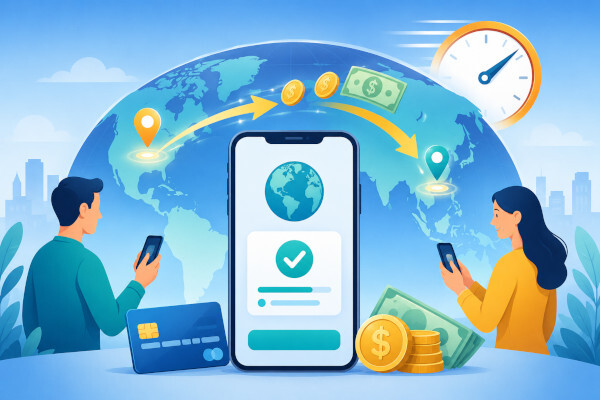
When someone searches for the fastest international money transfer, the reason is usually practical and urgent. The problem is that “fast” does not mean the same thing for every provider, country, currency, or payment method. A transfer advertised as instant may arrive in minutes on one route and take a day or longer on another. The same company may offer cash pickup in minutes, bank deposit within hours, and a slower transfer if you pay from a bank account.
The fastest international money transfer is usually not one universal service. It is the right combination of:
- the country you send from;
- the country you send to;
- how you pay;
- how the recipient receives the money;
- whether both sender and recipient have passed verification;
- the amount and currency;
- local banking hours, holidays, and compliance checks.
For urgent transfers, cash pickup, mobile wallet transfers, card deposits, and some express digital transfers are often the fastest. For planned transfers, a slower bank-funded option may be cheaper and still reliable.
Quick answer: what is the fastest way to send money internationally?
The fastest way to send money internationally is usually through a specialist money transfer provider that supports near-instant delivery on your route. In many cases, the fastest payout methods are cash pickup, mobile wallet transfer, card deposit, or instant bank deposit.
Traditional international bank wires are usually slower. A SWIFT or bank-to-bank international transfer often takes one to five business days, and sometimes longer if intermediary banks, compliance checks, or public holidays are involved.
A practical comparison
| Transfer method | Typical speed | Best for | Main limitation |
|---|---|---|---|
| Cash pickup | Minutes to same day | Emergency cash, recipient has no bank account | Fees, agent opening hours, ID required |
| Mobile wallet | Minutes to same day | Countries where mobile money is common | Not available everywhere |
| Card deposit | Minutes to hours, where supported | Fast digital delivery to a card | Country and card network limits |
| Same-app transfer | Instant to minutes | Both people use the same platform | Both accounts must be active and verified |
| Bank deposit through a transfer provider | Minutes to 1–2 business days | Sending to a bank account | Depends on local banks and payment rails |
| SWIFT bank transfer | 1–5 business days | Formal bank payments, larger transfers | Slower, possible intermediary fees |
The fastest option is not always the cheapest. Paying by debit or credit card and choosing express delivery can cost more than paying from a bank account. For larger amounts, the exchange rate may matter more than the transfer fee.
What “instant” really means
Many transfer companies use words like “instant”, “in minutes”, “same day”, or “fast delivery”. These terms are useful, but they should not be read as a guarantee for every transfer.
Instant
An instant transfer may arrive within seconds or minutes, but only if the provider, payment method, payout method, country, currency, and recipient details all support it. Verification or compliance checks can still slow it down.
In minutes
This is common for cash pickup, mobile wallet transfers, same-app transfers, and some card or bank deposits. The money may be available quickly, but the recipient still needs access to the payout channel. For cash pickup, the agent location must be open and able to pay out the transfer.
Same day
Same-day delivery is still fast for international transfers, especially for bank deposits. It usually means the money should arrive before the end of the business day, not necessarily immediately.
One to three business days
This is common for many bank-funded digital transfers and international bank deposits. It can be a reasonable choice when the transfer is not an emergency and the total cost is lower.
One to five business days
This is typical for many traditional international bank transfers, especially SWIFT transfers. Delays can happen when the transfer passes through intermediary banks or crosses time zones, weekends, or public holidays.
The fastest payout methods
The payout method is often more important than the provider name. The same provider may offer several delivery options with different speeds.
1. Cash pickup
Cash pickup is often one of the fastest ways to send money internationally when the recipient needs physical cash.
The sender pays online, in an app, or at an agent location. The recipient collects the money from a pickup point using a valid ID and transfer reference number.
Cash pickup can be useful when:
- the recipient does not have a bank account;
- the recipient needs cash immediately;
- local banks are closed or unreliable;
- the transfer is going to a country where cash pickup networks are widely used;
- the amount is small or medium-sized.
Large providers such as Western Union, MoneyGram, and Ria are strong in this area because they have physical agent networks. MoneyGram, for example, says cash pickup usually takes about 10 minutes, subject to agent hours and availability. Western Union also offers transfers that may arrive in minutes in some cases, but timing depends on the destination, receiving method, and local conditions.
Cash pickup has clear drawbacks:
- fees and exchange rate markups may be higher;
- the recipient must visit a location in person;
- the pickup point may be closed at night, on weekends, or during holidays;
- the recipient must have the correct ID;
- it is risky for payments to strangers.
Cash pickup is best for emergency family support, not for buying goods from unknown sellers, paying rental deposits to strangers, or sending money to someone you have only met online.
2. Mobile wallet transfer
Mobile wallet transfers can be very fast where mobile money is widely used. This is common in parts of Africa, Asia, and Latin America.
Instead of sending money to a bank account, the transfer goes directly to the recipient’s mobile wallet. The recipient can then use the wallet for payments, cash-out, bills, or local transfers depending on the country and provider.
Mobile wallet transfers are useful when:
- the recipient does not use a traditional bank;
- mobile money is common in the destination country;
- the recipient needs funds quickly;
- cash pickup would be inconvenient;
- the sender wants digital delivery with less physical movement.
The main limitation is coverage. Mobile wallet transfers depend on local wallet providers, phone number format, country rules, and the transfer company’s partner network. A provider may support mobile wallet delivery to one country but not to another.
Before paying, check:
- the exact wallet provider;
- the recipient’s registered mobile number;
- the maximum transfer amount;
- expected delivery time;
- whether the recipient needs to complete wallet verification.
3. Bank deposit through a specialist transfer provider
A bank deposit through a money transfer company can be much faster than a traditional SWIFT transfer, especially when the provider uses local payment rails.
Instead of moving money through a slow international bank chain, the provider may collect money from the sender locally and pay the recipient from a local account or local partner network. This can reduce both time and cost.
This method works well for:
- rent payments;
- family support;
- salary support;
- tuition and school fees;
- regular transfers to a banked recipient;
- sending money to your own account abroad.
The speed can range from minutes to one or two business days, depending on the route. Some providers show a precise estimate before payment. That estimate is more important than a general marketing claim.
Bank deposit is usually more convenient than cash pickup, but it depends heavily on accurate recipient details. A wrong account number, misspelled name, incorrect bank code, or mismatch between the recipient name and account holder can delay or reverse the transfer.
4. Card deposit and card-to-card transfer
In some countries, money can be sent directly to a recipient’s debit card or card-linked account. This may be faster than a standard bank transfer, sometimes arriving in minutes or hours.
Card deposit can be useful when:
- the recipient uses a debit card but you do not have full bank details;
- the country supports fast card payout;
- the recipient needs quick access to funds;
- the transfer amount is not too large.
Limitations:
- not all countries support card deposits;
- not all card networks or banks accept incoming transfers;
- fees can be higher;
- credit card-funded transfers may be expensive;
- some transfers may still be reviewed before release.
5. Same-app balance transfer
If both sender and recipient use the same app or financial platform, the transfer may be instant or nearly instant. This can apply to some digital wallets, multi-currency accounts, or payment apps.
This method can be fast because the money may move internally between balances rather than through external banks.
It works best when:
- both users already have verified accounts;
- both accounts support the same currency or corridor;
- the recipient can withdraw, spend, or convert the funds easily;
- the platform is available in both countries.
The weakness is access. A same-app transfer is only useful if the recipient can actually use the money after receiving it. A balance that arrives instantly but cannot be withdrawn locally may not solve the problem.
How your payment method affects speed
The way you pay for the transfer can be just as important as the payout method.
Debit card
A debit card is often one of the fastest ways to fund an international transfer. The provider can usually confirm the payment quickly, so the transfer can move to processing sooner.
Debit card funding is useful for urgent transfers, especially when combined with cash pickup, mobile wallet, card deposit, or fast bank deposit.
The downside is cost. Debit card payments can carry higher fees than bank-funded transfers. For small urgent transfers, the extra cost may be acceptable. For large transfers, it can become expensive.
Credit card
Credit card funding can also be fast, but it should be used carefully.
Possible costs include:
- provider card fee;
- credit card issuer fee;
- cash advance fee;
- interest from the transaction date;
- worse exchange rate compared with other methods.
Some providers or card issuers may also restrict credit card-funded money transfers. Before using a credit card, check whether the transaction will be treated as a cash advance.
Credit card funding may make sense only when the transfer is urgent and you understand the full cost.
Bank account, ACH, direct debit, or local bank transfer
Funding from a bank account is often cheaper but slower.
This method may take longer because the provider must wait for the funds to clear. In some countries and payment systems, this can be fast. In others, it may take one to three business days.
Bank-funded transfers are better for:
- planned payments;
- larger amounts;
- regular family support;
- sending to your own overseas account;
- cases where cost matters more than minutes.
They are less suitable when the recipient needs cash immediately.
Existing provider balance
If you already hold money in a transfer app or multi-currency account, using that balance may be one of the fastest options. The provider does not need to wait for an external card or bank payment.
This is useful for people who send money often, freelancers, remote workers, migrants, and people who maintain balances in several currencies.
The limitation is preparation. It only works if the funds are already there before the emergency happens.
Fast international money transfer services to consider
There is no single fastest provider for every country. The best choice depends on the route and receiving method.
Western Union

Western Union is often relevant when the recipient needs cash pickup. Its strength is physical reach and the ability to send to many countries and territories.
It can be useful for:
- emergency cash;
- recipients without bank accounts;
- countries where agent networks are more practical than bank deposits;
- transfers where the recipient can collect money in person.
Things to check:
- exact fee and exchange rate;
- agent location hours;
- recipient ID requirements;
- transfer limits;
- estimated delivery time before payment.
Western Union can be fast, but cash pickup still depends on the local agent.
MoneyGram

MoneyGram is another strong cash pickup option. It also supports bank account, mobile wallet, and other payout options on selected routes.
It can be useful for:
- cash pickup in minutes where available;
- sending to countries with many MoneyGram agent locations;
- recipients who prefer collecting cash;
- small and medium urgent transfers.
Things to check:
- pickup location availability;
- local operating hours;
- transfer fee;
- exchange rate;
- reference number and ID requirements.
MoneyGram is often fast for cash pickup, but it is not automatically the cheapest option.
Ria Money Transfer

Ria is useful on routes where it has strong agent, bank deposit, or wallet coverage. It offers cash pickup and digital payout options in many markets.
It can be useful for:
- cash pickup;
- transfers to Latin America and other corridors where Ria has strong coverage;
- users who want agent network availability;
- recipients who prefer local pickup.
Things to check:
- whether the recipient’s area has a convenient location;
- estimated delivery time;
- exact payout method;
- fee and exchange rate.
Remitly

Remitly is designed around remittances: people sending money to family and friends abroad. Depending on the corridor, it may offer express options, bank deposit, cash pickup, mobile money, or other delivery methods.
It can be useful for:
- family support;
- regular transfers;
- routes where Remitly has strong payout partners;
- debit card-funded urgent transfers.
Things to check:
- express vs economy options;
- payment method;
- delivery method;
- first-transfer verification;
- limits for your account and destination.
Remitly may be fast, but the exact speed depends on the sending country, receiving country, payment method, and payout method.
WorldRemit

WorldRemit is often useful where recipients use mobile money, bank deposit, cash pickup, or airtime services. It is a practical option for countries where mobile wallet delivery is common.
It can be useful for:
- mobile wallet transfers;
- cash pickup;
- bank deposits;
- sending to countries where mobile money is widely used.
Things to check:
- the exact wallet or bank supported;
- delivery estimate shown before payment;
- recipient phone number and wallet registration;
- fees and exchange rate.
WorldRemit states that most transfers arrive within minutes, but some may take longer depending on the receive method and local conditions.
Wise

Wise is often strong for transparent pricing and bank account transfers. It uses clear fees and usually shows the expected delivery time before confirmation.
It can be useful for:
- sending to a bank account;
- planned international payments;
- personal account-to-account transfers;
- freelancers and remote workers;
- people who care about exchange rate transparency.
Wise is not always the fastest cash solution because it does not focus on physical cash pickup in the same way as Western Union or MoneyGram. It can be very fast on some routes, but other routes may take longer.
Revolut

Revolut can be fast when both sender and recipient use Revolut, or when a supported international transfer route is available. It may be useful for people who already use a multi-currency app.
It can be useful for:
- app-to-app transfers;
- multi-currency balances;
- frequent travelers;
- users who already hold funds in the app.
Things to check:
- whether both countries are supported;
- withdrawal options for the recipient;
- fees outside plan limits;
- exchange rates on weekends or outside allowance limits;
- transfer limits.
Xoom

Xoom, a PayPal service, can send money to bank accounts, debit cards, mobile wallets, cash pickup, and bill payments depending on the country.
It can be useful for:
- users who already use PayPal;
- fast transfers on supported routes;
- bank deposits and cash pickup in selected countries;
- international bill payments where available.
Xoom notes that funds are often delivered within minutes, but delivery can take longer due to compliance reviews, partner hours, time zones, local holidays, system availability, or availability of funds.
OFX

OFX is usually more relevant for larger or planned transfers than for emergency cash. It focuses on international payments and foreign exchange.
It can be useful for:
- larger transfers;
- business payments;
- property-related payments;
- planned bank-to-bank transfers;
- users who care about exchange rates more than instant delivery.
OFX says most transfers take one to two business days after it receives the funds, depending on the country. That can be fast for larger bank transfers, but it is not the same as cash-in-minutes delivery.
How to choose the fastest option for your exact transfer
A provider name alone is not enough. Use this process before sending.
Step 1: Start with the recipient’s real need
Ask what the recipient needs:
- cash in hand;
- money in a bank account;
- money in a mobile wallet;
- money on a card;
- app balance;
- payment of a bill;
- mobile airtime.
If the recipient needs physical cash today, a cheap bank transfer that arrives tomorrow may not help. If the recipient needs to pay rent from a bank account, cash pickup may be inconvenient.
Step 2: Check the exact route
Transfer speed depends heavily on the corridor.
A service may be fast from the United States to Mexico, but slower from Germany to India or from Canada to Ghana. The only reliable estimate is the one shown for your exact transfer before payment.
Check:
- sending country;
- receiving country;
- currency;
- payment method;
- payout method;
- transfer amount.
Step 3: Compare total received amount
Do not compare only the visible fee.
The real cost includes:
- transfer fee;
- exchange rate markup;
- payment card fee;
- possible recipient bank fee;
- possible intermediary bank fee;
- cash pickup or local payout costs, if any.
A provider with a “zero fee” may still earn money through a weaker exchange rate. For larger transfers, a small difference in exchange rate can cost more than the transfer fee.
Step 4: Check verification before an emergency
First transfers are more likely to be delayed. Providers may ask for identity documents, proof of address, source of funds, or additional information about the recipient.
If you often send money abroad, it is better to create and verify your account before you need an emergency transfer.
Step 5: Avoid avoidable delays
Before confirming the transfer:
- spell the recipient’s name exactly as it appears on ID or bank account;
- check bank account number, IBAN, SWIFT/BIC, sort code, routing number, or local bank code;
- confirm the recipient’s mobile wallet number;
- use the correct country and currency;
- check agent location hours for cash pickup;
- avoid public holidays where possible;
- read the delivery estimate before payment.
Step 6: Split urgent and non-urgent needs
If the recipient needs some money now but not the full amount immediately, consider splitting the transfer.
Example:
- send a smaller amount by cash pickup or mobile wallet for immediate needs;
- send the larger amount by a cheaper bank-funded transfer.
This can reduce cost while still solving the urgent problem.
What can delay an “instant” international transfer?
Even a transfer that normally arrives in minutes can be delayed. Common reasons include:
- sender identity verification;
- recipient identity verification;
- incorrect recipient details;
- name mismatch;
- large amount;
- unusual transfer pattern;
- sanctions or compliance screening;
- bank cut-off times;
- weekends;
- public holidays;
- intermediary banks;
- payout partner delays;
- mobile wallet limits;
- recipient bank review;
- cash pickup location closed;
- local cash availability issues;
- technical problems at the provider or payout partner.
This is why the phrase “instant international money transfer” should be treated carefully. A provider may process many transfers quickly, but it cannot guarantee instant delivery in every situation.
Fastest vs cheapest: which matters more?
Speed and cost often move in opposite directions.
The fastest options are often:
- debit card-funded transfer;
- credit card-funded transfer;
- cash pickup;
- express delivery;
- instant card or wallet payout.
- The cheaper options are often:
- bank-funded transfer;
- non-urgent bank deposit;
- provider balance transfer;
- planned foreign exchange transfer.
For small emergency transfers, paying more for speed can make sense. If someone needs money for food, transport, medicine, or accommodation today, minutes matter.
For large transfers, speed should not be the only priority. Exchange rate, provider reliability, limits, documentation, and support are more important. A poor exchange rate on a large transfer can cost much more than waiting one extra business day.
Best transfer method by situation
Emergency family support
Best options: cash pickup, mobile wallet, fast bank deposit, or card deposit.
Choose cash pickup if the recipient needs physical cash and can reach an agent location. Choose mobile wallet if the recipient already uses a supported wallet. Choose fast bank deposit if the recipient needs money in an account.
Recipient has no bank account
Best options: cash pickup or mobile wallet.
Cash pickup works when the recipient has a valid ID and a nearby location. Mobile wallet works when the recipient has a registered wallet and can use or withdraw the money locally.
Paying rent, tuition, or bills abroad
Best options: bank deposit or specialist transfer provider.
These payments usually need a record and may involve larger amounts. Speed matters, but a clear transaction trail and accurate recipient details are more important than cash pickup.
Sending a large amount
Best options: Wise, OFX, Xe, bank-supported specialist transfer, or another regulated FX provider available in your country.
For large transfers, compare exchange rates carefully. Also check limits, compliance requirements, and whether the provider may request documents about the source of funds.
Sending money to your own account abroad
Best options: specialist bank transfer provider or multi-currency account.
This is usually not an emergency cash scenario. Cost, exchange rate, and reliability are usually more important than a few minutes of speed.
Sending to another user of the same app
Best option: same-app transfer, if both users can access and withdraw the funds.
This can be very fast, but it only works well when both accounts are verified and the recipient can actually use the money in their country.
Safety tips for urgent international transfers
Urgency is one of the most common tools used by scammers. When people feel rushed, they make mistakes.
Use these rules:
- Do not send money to someone you do not personally know.
- Be careful with urgent messages from “relatives” asking for help from a new number.
- Confirm emergency requests through another channel before sending.
- Do not use cash pickup to pay unknown sellers.
- Be suspicious of rental deposits, job fees, visa fees, investment opportunities, and romance requests.
- Do not share the transfer reference number publicly.
- Keep the receipt until the recipient confirms collection or deposit.
- Use regulated providers.
- Check whether the provider offers tracking and support.
- If something feels wrong, stop before confirming the transfer.
Cash pickup is useful for genuine emergencies, but it is also risky when the recipient is unknown. Once cash is collected, recovery may be difficult or impossible.
Practical checklist before sending
Before you pay, check:
- Is the provider available in both countries?
- What payout method does the recipient need?
- What delivery estimate is shown for this exact transfer?
- Is the recipient’s name correct?
- Are the bank, card, wallet, or pickup details correct?
- What is the total amount the recipient will receive?
- Is the exchange rate acceptable?
- Are there card fees or cash advance fees?
- Are there transfer limits?
- Could verification delay the transfer?
- Is the cash pickup location open?
- Is today a weekend or public holiday in either country?
If the transfer is urgent, do not choose a method only because it has the lowest fee. If the transfer is large, do not choose a method only because it says “instant”.
FAQ
What is the fastest international money transfer method?
The fastest methods are usually cash pickup, mobile wallet transfer, same-app transfer, card deposit, or an express transfer through a specialist provider. The exact speed depends on the sending country, receiving country, payment method, payout method, amount, and verification status.
Can international money transfers be instant?
Yes, some international transfers can be instant or near-instant. This is more common with same-app transfers, mobile wallets, cash pickup, card deposits, and some fast bank deposit routes. However, instant delivery is not guaranteed for every transfer. Verification, compliance checks, local bank processing, partner hours, and public holidays can cause delays.
Is Western Union the fastest way to send money internationally?
Western Union can be one of the fastest options when the recipient needs cash pickup and there is an open agent location nearby. It is not always the fastest or cheapest option for bank deposits. The best choice depends on the destination country and receiving method.
Is MoneyGram good for urgent international transfers?
MoneyGram can be useful for urgent cash pickup because it has a large agent network and cash pickup can be available quickly on supported routes. The recipient usually needs a valid photo ID and reference number. Pickup time still depends on agent opening hours and local availability.
Is a bank transfer the fastest way to send money abroad?
Usually not. Traditional international bank transfers can take one to five business days. A specialist transfer provider may send money to a bank account faster on some routes, especially if it uses local payment systems. For emergencies, cash pickup or mobile wallet may be faster than a bank transfer.
Why is my international money transfer delayed?
Common reasons include identity verification, incorrect recipient details, name mismatch, compliance review, large transfer amount, bank cut-off times, weekends, public holidays, intermediary banks, payout partner delays, or local bank review.
What is the fastest way to send money to someone without a bank account?
Cash pickup or mobile wallet transfer is usually the fastest option. Cash pickup works when the recipient has a valid ID and access to an agent location. Mobile wallet works when the recipient has a supported wallet and can use or withdraw the funds locally.
Are instant international transfers more expensive?
Often, yes. Express delivery, debit card funding, credit card funding, cash pickup, and instant payout methods can cost more than slower bank-funded transfers. Always compare the total amount the recipient receives, not only the visible fee.
Can I send a large international transfer instantly?
Sometimes, but large transfers are more likely to trigger additional checks. For large amounts, it is usually better to prioritize exchange rate, provider reliability, transfer limits, and documentation over instant delivery.
What details do I need for the fastest transfer?
For cash pickup, you usually need the recipient’s full legal name, country, and sometimes city or pickup location. For bank deposit, you may need bank name, account number or IBAN, SWIFT/BIC, routing number, sort code, or local bank code. For mobile wallet, you need the recipient’s registered mobile number and wallet provider.
Are cash pickup transfers safe?
Cash pickup transfers can be safe when sent to someone you know through a regulated provider. They are risky when used to pay strangers, online sellers, fake landlords, romance contacts, or investment schemes. Once cash is collected, it may be difficult to recover.
How can I make sure my international transfer arrives as fast as possible?
Use a verified account, choose a fast payout method, pay with a fast funding method such as debit card or existing balance where appropriate, enter recipient details exactly, avoid weekends and holidays for bank deposits, and check the provider’s delivery estimate before confirming the transfer.